A Daily Task Checklist for Deep Work and High Output
A daily task checklist isn't just another to-do list. Think of it as a curated, high-priority game plan for your day, usually containing just 3-5 essential items you absolutely intend to accomplish. It’s a move away from endless, overwhelming lists and toward a focused, intentional plan that channels your energy where it truly counts.
Why Your To-do List Is Holding You Back
Does your to-do list feel more like a source of dread than a tool for clarity? You're not alone. For many of us in deep-work roles, the classic approach to task management just doesn't cut it. The problem isn't the list itself, but how we're trained to use it.
Too often, that list becomes a chaotic dumping ground for every random thought, minor request, and far-off ambition. This creates a constant mental drain, forcing you to re-prioritize from a sea of options every time you glance at it. It’s a perfect recipe for decision fatigue, leaving you mentally exhausted before you’ve even started the real work.
The Cycle of Reactivity and Lost Time
Staring down a mountain of tasks, what’s the natural instinct? Pick off the easy, quick ones first. It feels good for a moment, but it’s a trap. Your most critical, high-impact work gets perpetually shoved to "tomorrow." This keeps you busy, sure, but not productive. You spend your day putting out small fires instead of making real, meaningful progress.
The numbers back this up. While time management surveys show 33% of people worldwide rely on to-do lists, a massive 75% admit they waste 1-2 hours daily on low-value tasks or meetings. That number has even jumped 10% in recent years. For software engineers and other remote workers, this is especially painful, as every ping and distraction chips away at the focus needed for deep work.
The goal isn't just to be busy; it's to be effective. A successful day is measured by the significance of what you complete, not the sheer number of items you cross off.
Shifting from a List to a Plan
The key is to transform that reactive list into a proactive daily plan. A well-designed daily task checklist is built for a different job. It's not a brain dump—it's a strategic commitment. By deliberately choosing only a handful of key objectives each morning, you're not just making a list; you're creating a clear roadmap for the day.
This focused approach helps you do a few critical things:
- Slash decision fatigue by handling all your prioritizing once a day.
- Build momentum by scoring meaningful wins every single day.
- Guard your focus by making it crystal clear what deserves your attention.
- Connect daily actions to your most important long-term goals.
When you make this shift, you’re not just organizing tasks—you’re taking back control of your day and ensuring your best energy is spent on high-value output, not just low-value activity.
Building Your High-Performance Checklist
Alright, let's get practical. Moving from theory to action is where you'll start to reclaim your day. The goal here isn't to adopt some rigid, one-size-fits-all system. It's about building a personalized checklist framework—a system designed for how you actually work. This all starts by creating a single source of truth for your daily plan.
Let’s be honest, the modern workday is a fragmented mess. Tasks fly in from project management tools, emails, Slack messages, and random drive-by conversations. This creates a constant state of digital clutter, forcing you to pay a mental tax from context switching before you even start your most important work. A high-performance checklist cuts through that noise, bringing everything into one intentional plan.
Consolidate and Clarify Your Tasks
First things first: pull everything into one place. This means scanning your project boards, sifting through your inbox, and checking your team chats for every commitment you've made. But you're not just mindlessly copying and pasting. You’re translating vague requests into clear, actionable steps.
For example, a task like "Finish report" is practically useless. It's too big, too vague. Instead, you'll want to break it down.
- Break Down Complexity: Deconstruct that monster project into bite-sized subtasks. "Finish report" could become "Analyze Q3 sales data," "Draft initial summary," and "Create data visualizations." See the difference? You just turned an intimidating goal into an approachable series of steps.
- Enrich with Context: As you create these tasks, attach all the necessary information directly to them. This might be a link to a Google Doc, the name of a key decision-maker, or a specific instruction from your manager. Having everything you need right there eliminates that frustrating scramble for context later.
This initial consolidation is the bedrock of a powerful daily checklist. It’s the move that takes you from a state of scattered reactivity to one of organized clarity. If you want to dig deeper into how centralizing your workflow can boost your output, check out our guide on productivity and efficiency.
Adopt Flexible Time Blocking
Now that you have a clear, consolidated list of what needs to get done, it's time to map out your day. This isn't about creating a rigid, minute-by-minute schedule that shatters the moment an unexpected meeting pops up. Think of it more like flexible time blocking—creating an adaptive blueprint for your day.
Start by blocking out your non-negotiable commitments. These are things like team meetings, appointments, or parent-teacher conferences. Then, look at the open spaces in your calendar and schedule dedicated "deep work" sessions for your most important tasks. This simple visual map helps you realistically assess what you can actually achieve and, more importantly, it protects your most valuable resource: focused time.
Without this structure, it's easy to fall into the classic traps of a messy to-do list. This is a cycle I've seen countless times, starting with overwhelm and ending in burnout.
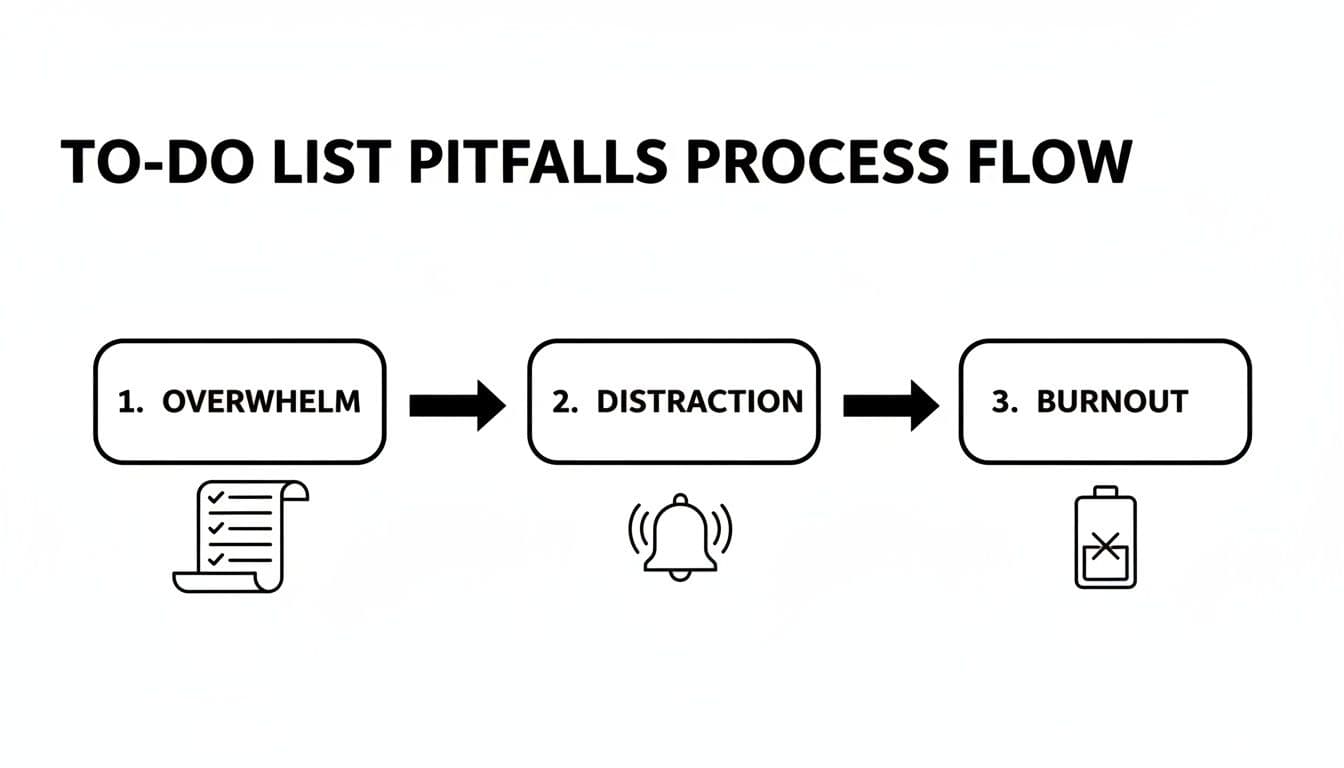
As the visual shows, an oversized, unstructured list leads to scattered attention, which quickly drains your energy and motivation.
A well-structured daily task checklist acts as a buffer against this downward spiral. It stops being just a list of things to do and becomes a deliberate plan for how and when you’ll do them. By designing an adaptive system, you're setting yourself up to tackle the day’s priorities with intention and control, not just react to them.
The Art of Ruthless Prioritization
A productive day isn't about cramming more things in; it’s about doing what actually matters. Once you've brain-dumped your tasks, the real work begins: prioritizing with almost surgical precision. This is how you turn a simple list into a strategic roadmap for your day, making sure your energy goes toward your most important goals.
There's something deeply satisfying about making and checking off a list. Way back in 2008, a Microsoft survey on to-do lists found that 76% of people in the U.S. kept at least one. And for 73% of them, that list was a way to manage stress and feel in control.
For knowledge workers today, a well-prioritized daily task checklist in a tool like Locu is more than just a nice-to-have. It’s a core part of getting things done and keeping the overwhelm at bay. It's time to move beyond just asking "what's next?"
Urgent vs. Important: Stop Reacting, Start Acting
One of the best mental frameworks for this is the Eisenhower Matrix. It's a classic for a reason. The idea is to sort every single task by two criteria: is it urgent, and is it important? This simple exercise is your ticket out of the "tyranny of the urgent"—that feeling of spending all day putting out fires instead of making real progress.
Here’s how to apply it to your daily checklist:
- Do First (Important and Urgent): These are the critical, time-sensitive items. They are your absolute top priorities for the day.
- Schedule (Important but Not Urgent): This is where your deep work lives. These are the tasks that drive long-term success. Block out specific, protected time for them.
- Delegate (Urgent but Not Important): Think interruptions, some meetings, and minor requests. If you can hand them off, do it. They're often just noise disguised as work.
- Eliminate (Not Urgent and Not Important): Get these off your list. They’re just draining your energy with no real benefit.
By sorting your tasks this way, you take back control. Your inbox no longer runs your day. You're making deliberate choices based on what actually moves the needle, shifting from just being busy to being truly effective.
The Impact vs. Effort Quick-Sort
Another incredibly practical approach is to weigh each task by its impact and the effort required. It’s a quick mental check that helps you spot the easy wins and identify the big projects that need your best, most focused energy.
This helps you map out your day with a bit more strategy:
- Quick Wins (High Impact, Low Effort): Knock these out first thing. They build momentum and give you an early sense of accomplishment.
- Major Projects (High Impact, High Effort): These are your big-ticket items. Break them into smaller pieces and schedule them as dedicated focus sessions.
- Fill-in Tasks (Low Impact, Low Effort): Use these to fill the small gaps in your day, like the 15 minutes between meetings.
- Time Sinks (Low Impact, High Effort): Seriously question why these are even on your list. These are the tasks to avoid at all costs.
There are many ways to slice and dice your task list. The key is to find a method that clicks with your workflow and helps you make clear, conscious decisions about where your focus should go.
Prioritization Methods for Your Daily Checklist
Choosing the right prioritization technique can feel like a task in itself. Below is a quick comparison of a few popular methods to help you figure out which one might be the best fit for you and how to apply it directly in Locu.
| Method | Best For | How to Apply in Locu |
|---|---|---|
| Eisenhower Matrix | Gaining clarity and avoiding reactive "fire-fighting" by separating urgency from importance. | Use tags like #urgent, #important, or #schedule to filter and sort your tasks for the day. |
| Impact/Effort Scale | Quickly identifying "quick wins" to build momentum and strategically planning for major projects. | Create custom priority levels like "High Impact" or "Low Effort" to visually sort your list. |
| Eat the Frog | Overcoming procrastination on a single, crucial task that will have the biggest impact on your day. | Pin your most important task (the "frog") to the top of your list and commit to doing it first. |
| MoSCoW Method | Project-based work where you need to define requirements and features with stakeholders. | Use labels: Must-have, Should-have, Could-have, Won't-have. Focus daily on the "Musts." |
No single method is perfect for everyone or every situation. Feel free to experiment or even combine elements from different frameworks.
The ultimate goal is simple: commit to 3-5 non-negotiable tasks every single morning. This small ritual forces you to be intentional about your focus, making sure that at the end of the day, you've moved closer to what truly matters.
Turning Your Plan into Focused Action
A great plan is just a starting point. You can have the most perfectly prioritized daily task checklist in the world, but the real test is turning those well-laid intentions into deep, uninterrupted work. This is where we bridge that crucial gap between planning and doing.

If I had to name the biggest killer of deep work, it's context switching. Every single time you have to pause to hunt for a document, re-read an email chain, or look up project requirements, your concentration shatters. That little mental tax adds up, slowly draining your energy and momentum.
The solution? Turn each task on your list into its own self-contained, immersive work block.
Launching Guided Focus Sessions
Instead of just glancing at your list and randomly picking something, you can launch a guided focus session directly from the task itself. This small action is a powerful signal to your brain: it's time for dedicated, single-minded effort. Inside this session, you have everything you need—notes, relevant links, sub-tasks—attached right there. No more hunting around.
This approach builds a fortress around your attention. You're no longer juggling a dozen browser tabs or applications; all your resources are right where you need them, when you need them. It makes getting started so much easier and helps you slip into a state of flow almost effortlessly. If you want to dive deeper into this method, our guide on a free interval timer app is a great next step.
By bundling a task with its context and a dedicated timer, you create an environment where focused work is the path of least resistance. It stops being about raw willpower and starts being about smart workflow design.
Automating Your Work History
Here's one of the best parts of working this way: it automatically tracks your progress in the background. As you move through these focus sessions, your time is logged against each specific task without you having to do a thing. This isn't just about tracking hours for the sake of it; it's about building a precise, effortless history of what you've actually accomplished.
This automated log becomes an incredible source of personal data. After just a week or two, you can look back and see exactly where your time and effort went. This feedback loop gives you insights that are nearly impossible to get from memory alone.
- Understand Your Rhythms: You might discover you're a powerhouse in the morning, which means that's when you should tackle your most demanding projects.
- Improve Your Estimates: You’ll see how long tasks actually take versus how long you thought they would, which leads to much more realistic planning down the road.
- Gain True Clarity: Get an honest, data-driven picture of your work patterns, helping you spot hidden time-sinks and double down on what’s truly effective.
Ultimately, turning your plan into action is all about creating a system that defends your attention and gives you clear feedback. By transforming each item on your daily task checklist into a guided work session, you don’t just get more done—you build a smarter, more sustainable workflow for the long haul.
Creating Rituals for Lasting Consistency
The best productivity systems aren't about fancy tools or a sudden burst of motivation. They’re built on habits that actually stick. A good daily task checklist becomes an absolute powerhouse when it's supported by simple, consistent rituals. These routines, one for the morning and one for the evening, act like bookends for your day and turn planning from a chore into a natural, momentum-building practice.
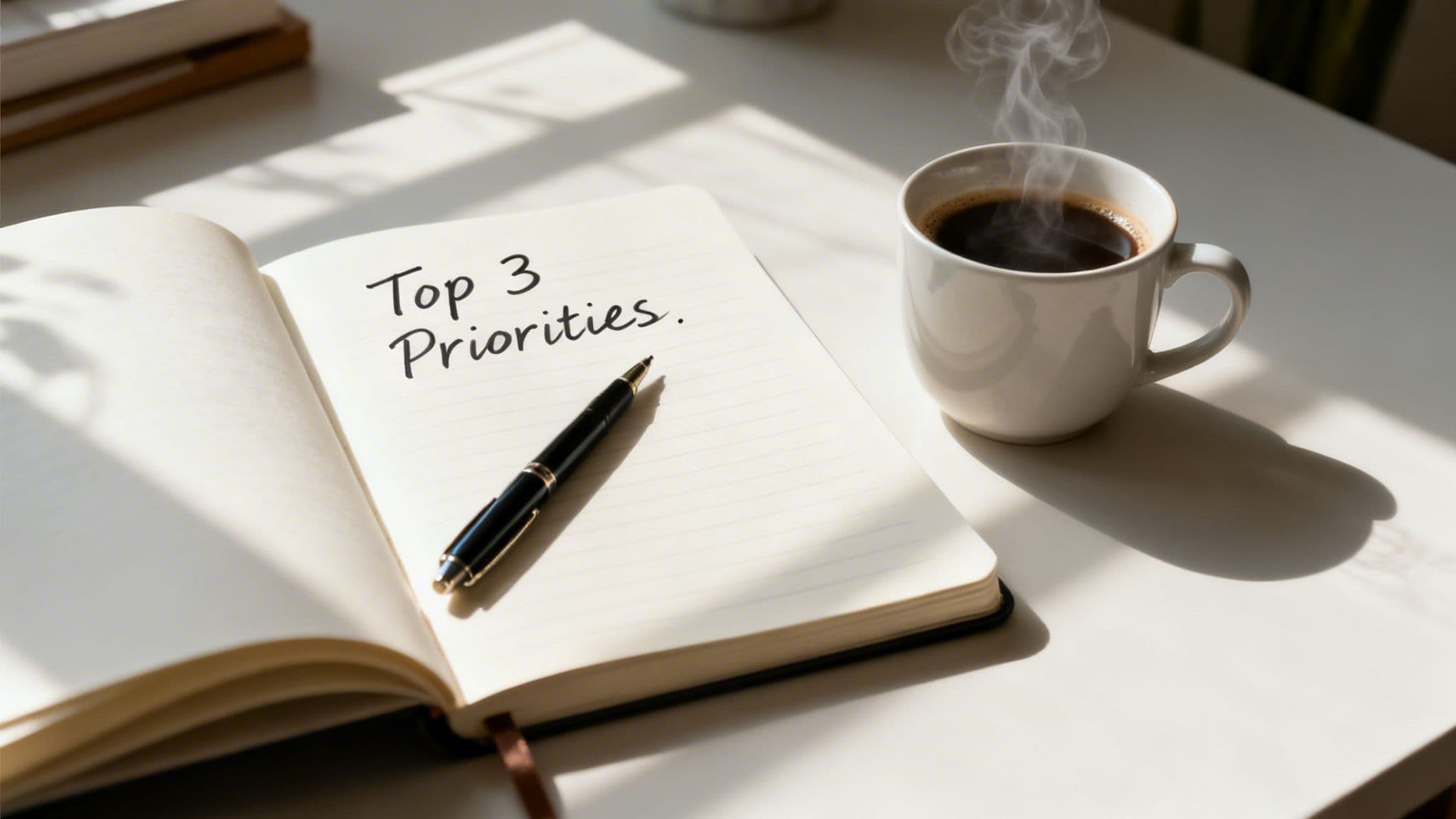
These rituals don't need to be long or complicated. In fact, keeping them short—just 5-10 minutes each—is the secret to making them last. They're just dedicated moments to be intentional, setting you up for a focused day and a truly restful night.
Your Morning Planning Ritual
Think of your morning ritual as setting the trajectory for the entire day. Instead of immediately diving into your inbox and letting other people's emergencies hijack your schedule, you take a moment to get in the driver's seat. It's a proactive move that frames your day around your most important work.
This is your daily huddle with yourself. The goal is to answer one simple question: "What will make today a win?"
- Review and Commit: Take a quick look at the tasks you roughed out the night before. This isn't about re-planning, just re-orienting.
- Select Your "Big 3": Pinpoint the 1-3 most critical tasks that will move the needle. These are your non-negotiables for the day.
- Visualize Success: Spend just 30 seconds picturing what it feels like to have these tasks completed. This little mental rehearsal primes your brain for focus.
This quick session cuts through the morning fog and decision fatigue before they have a chance to set in. You start the day calm and with purpose. To make this even more powerful, you can align your tasks with your body's natural energy rhythms. Learn more about how to do that by exploring ultradian cycles for deep work.
Your Evening Shutdown Ritual
The evening ritual is just as crucial. It's your opportunity to consciously close all the open loops from the day, creating a clean mental break between "work" and "life." This "shutdown" process tells your brain it's okay to disengage, which stops that nagging feeling of unfinished business from following you into your evening.
This end-of-day review isn't about grading your performance. It's about acknowledging what you did, learning from what you didn't, and setting yourself up for an easy start tomorrow.
A simple shutdown routine might look like this:
- Celebrate What’s Done: Give yourself credit for your accomplishments, big or small. This creates a positive feedback loop that builds motivation.
- Process What’s Left: For any unfinished items, make a quick decision: does it roll over to tomorrow, or can it be pushed to later in the week? Get it out of your head.
- Draft Tomorrow’s Plan: Do a quick brain dump of any new tasks that came up and sketch out a rough plan for tomorrow. This one action makes the next morning exponentially easier.
This simple habit of closing out the workday is a gift to your future self. It ensures your daily task checklist remains a reliable tool that fuels consistent, high-impact work day after day.
How to Measure Your Progress and Actually Sharpen Your Workflow
A daily task list isn't just a static plan; it's a living tool you can use to learn and get better. But how do you know if it's really working? The secret is to stop guessing and start using your own data to make smarter decisions.
When you look back at your completed focus sessions, you get a clear, unbiased picture of how you actually spend your time. This is where you’ll find the kind of insights your memory alone just can't provide. It’s how you answer the tough questions about what’s working and what isn’t.
Turning Your Data Into Smarter Decisions
Think of reviewing your work history as a regular check-up for your productivity. It helps you pinpoint patterns and make small tweaks that have a huge impact. You’re not just tracking hours; you’re collecting intel to refine your whole approach.
So, what should you be looking for?
-
Your Personal Prime Time: Do you find yourself crushing complex work before lunch? Maybe you hit your stride in the afternoon. Use that knowledge to slot your most demanding deep work sessions into your natural energy peaks.
-
How Long Things Really Take: We all underestimate how long tasks take. Your data will show you the truth. This feedback loop is gold for building more realistic and less stressful plans for the future.
-
Common Distraction Triggers: Notice a pattern of interruptions every day around 2 PM? Now you have the data to do something about it, like blocking off that time as unavailable or moving meetings to a different part of your day.
The real aim here is to get a little bit better every single day. By using concrete data from your own work, you can fine-tune your planning, your estimates, and how you execute, creating a positive cycle of improvement.
This drive for smarter task management isn't just a personal quest; it's a massive trend. The global market for these tools is growing rapidly, with effective planning saving users hundreds of hours a year. With nearly half of all workers relying on to-do lists to get through their day, it’s obvious that having a structured system is no longer a "nice-to-have"—it's essential.
A Few Common Questions Answered
When you start crafting a daily checklist, a few questions almost always pop up. Thinking through these ahead of time can make the difference between a system that sticks and one that gets abandoned after a week.
So, How Many Tasks Should I Actually Put on My List?
This is the big one. While it's tempting to list everything, the sweet spot for real, deep work is usually 3-5 major tasks per day.
Think of these as your "must-do" items—the ones that directly push your most important projects forward. You can always have a longer "someday" or backlog list, but your daily focus should be ruthlessly curated. This simple constraint is what keeps you from feeling overwhelmed and helps you build real momentum instead of just chasing busywork.
What Happens If I Don't Finish Everything?
First off, it happens to everyone. Don't treat it as a failure; treat it as data.
When you sit down for your evening review, just ask yourself what happened. Did a task take way longer than you thought? Did a surprise meeting blow up your afternoon? The goal isn't perfection; it's learning.
Use that insight to make a smarter plan for tomorrow. Maybe that unfinished task needs to be broken into smaller pieces, or maybe its priority wasn't as high as you thought. This is how you refine your planning skills over time.
How Do I Keep My Personal Checklist from Clashing with Team Tools?
The last thing you want is to spend your day manually syncing your personal to-do list with team platforms like Jira or Linear. That’s a recipe for distraction and wasted effort. A good personal system should pull from your team's world, not fight against it.
A few things can help create a smooth workflow:
- Prioritize two-way sync: Look for tools that can automatically update tasks in both directions. When you check something off, your team should see it, and vice versa.
- Make your list the "command center": Start your day by pulling the relevant tickets and assignments into your personal plan. This lets you build a focused schedule based on shared priorities without living inside a noisy team tool.
- Automate your status updates: Some integrations can post updates to a shared Slack channel when you start or finish a task. It keeps everyone in the loop without you having to break your concentration to type "Done!"
This approach gives you a single source of truth for your day, letting you focus on the work itself while staying perfectly aligned with your team.
Ready to build a daily task checklist that actually drives deep work and keeps distractions at bay? Locu brings together a minimalist to-do list, a focus timer, and seamless integrations to help you turn your plans into high-quality work. Give it a try with a free trial at https://locu.app and see what you can accomplish.
Ship high-impact work with a daily checklist
Join developers who turn daily checklists into focused output.