Your Guide to a Daily Task Tracker for Deep Work
We've all been there: staring at a to-do list that feels more like a vague wish list than an actual plan. A daily task tracker is the antidote to that feeling. It’s not just another checklist; it’s an active system designed to bring intention and clarity to how you spend your time.
Moving Beyond a Simple To-Do List
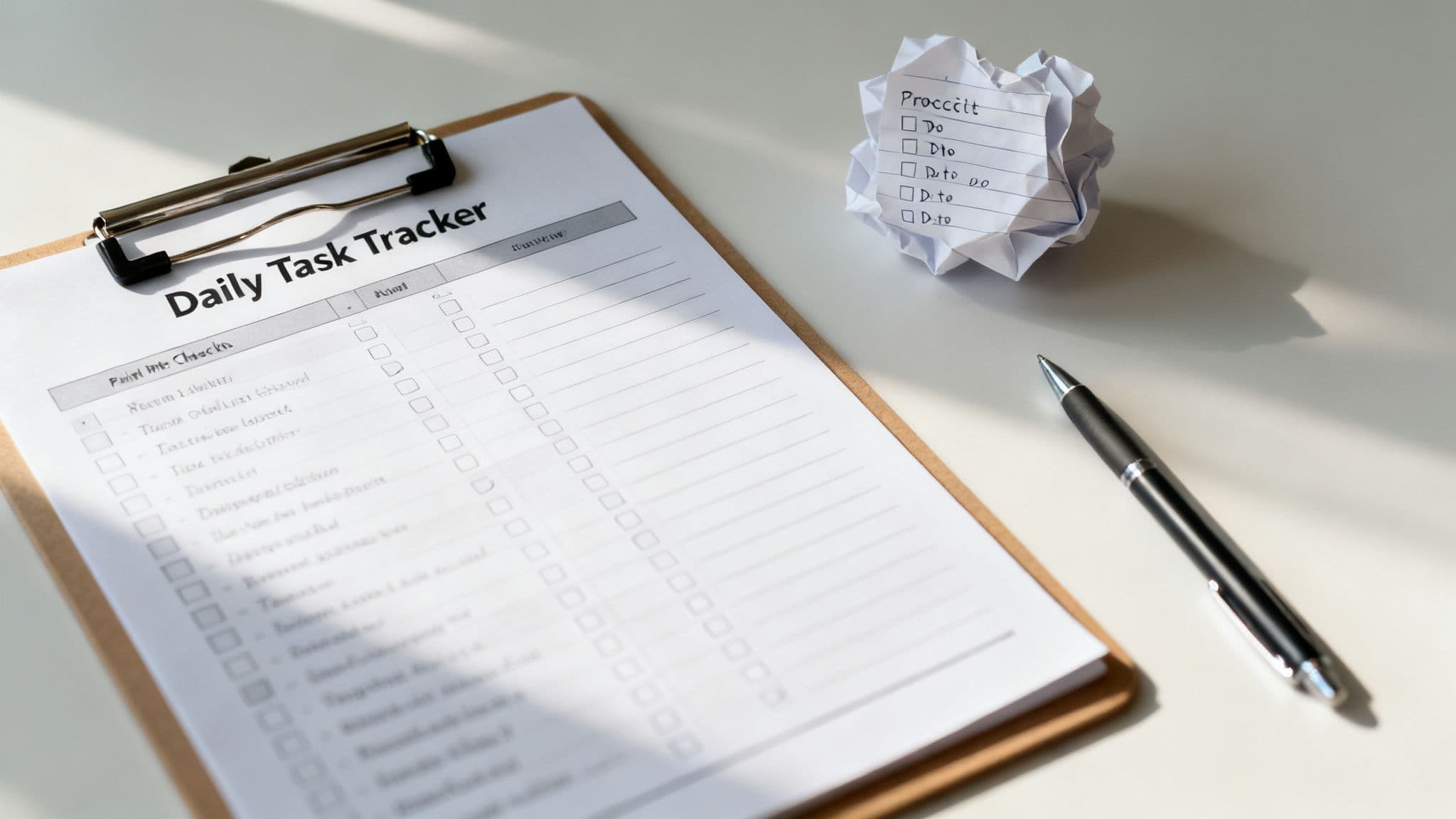
Let's be real—the classic to-do list is broken. It’s great at capturing what you need to do, but it offers zero guidance on how or when you'll actually do it. That’s why so many of our days end with a long list of unchecked boxes and a nagging sense of being behind.
A daily task tracker changes the game entirely. Think of it like the difference between a grocery list and a pilot's pre-flight checklist. One is a simple reminder of things you need. The other is a systematic process designed to ensure a successful outcome. The tracker is your pre-flight check for a productive day.
From Passive Reminders to an Active Plan
The real magic happens when you shift from a passive list to an active plan. A daily task tracker forces you to think critically about your time and energy before the day’s chaos kicks in. Instead of just jotting down tasks, you're assigning them specific time blocks and a clear priority.
This simple act of planning creates an incredible amount of structure. It helps you:
- Gain Crystal-Clear Clarity: You know exactly what needs your attention and what can wait.
- Structure Your Focus: You can carve out dedicated time for high-value work, protecting it from the constant stream of distractions.
- Turn Big Goals into Small Steps: It helps you break down intimidating projects into manageable actions you can tackle today.
This is the bedrock of deep work. By creating a solid plan, you eliminate the mental drag of constantly deciding what to work on next.
A well-structured daily plan is your best defense against decision fatigue and the productivity-killing whiplash of context switching. It helps you flow from one task to the next with purpose and momentum.
Cut Through the Noise and Actually Focus
Most knowledge workers spend a surprisingly small fraction of their day on the work they were hired to do. The rest gets eaten up by admin tasks, meetings, and endless interruptions. A daily task tracker acts as a powerful filter, helping you cut straight through that noise.
When you commit to a plan, you're creating a roadmap that guides your attention. This proactive approach keeps you focused on high-impact activities instead of just reacting to every email and notification that pops up. It's the first real step toward taking back control of your day and pouring your energy into what truly matters.
How a Daily Task Tracker Unlocks Deep Work
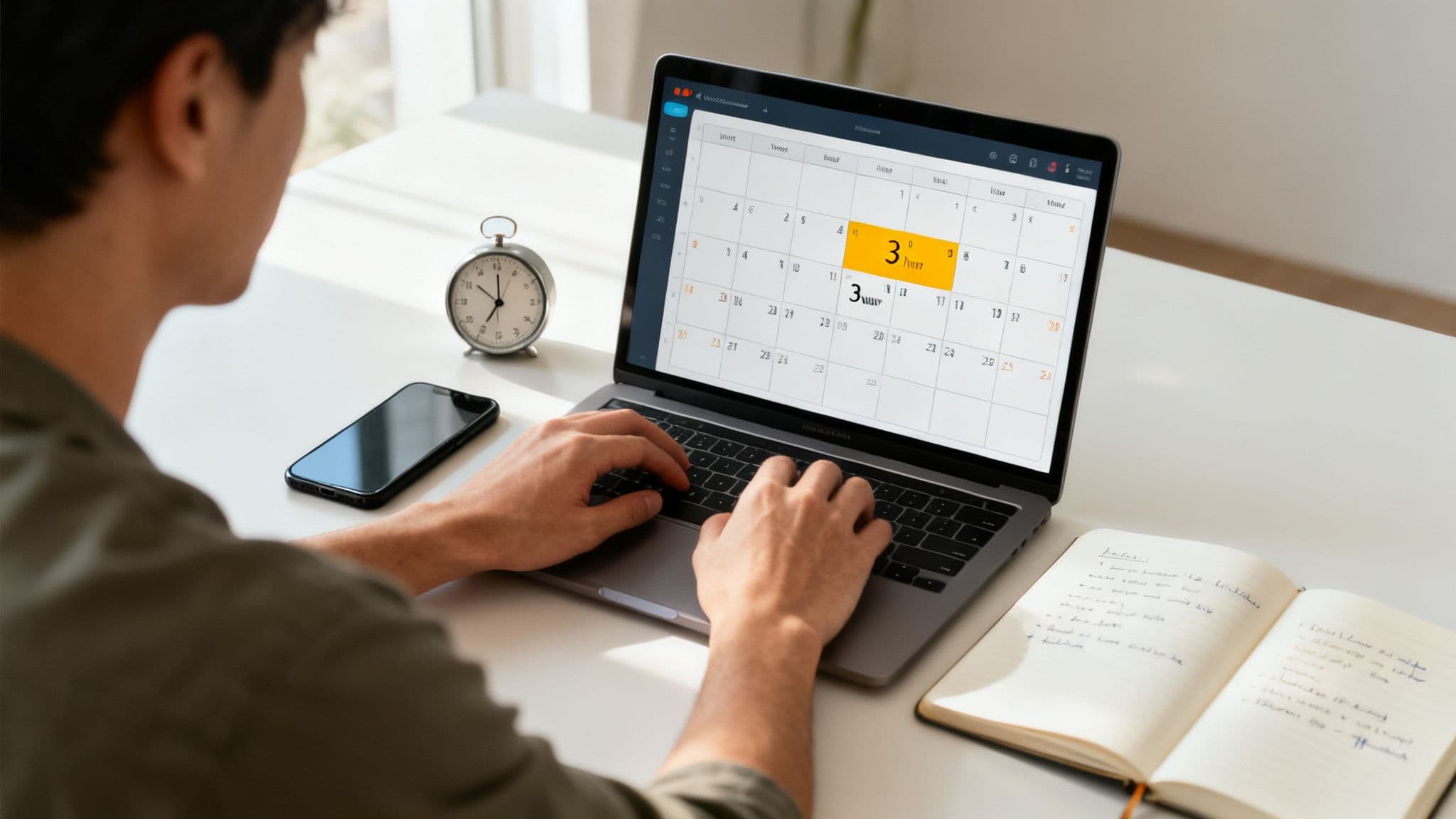
An unplanned day is a playground for distractions. Without a clear map, you’re constantly pulled into reactive, shallow work—ping-ponging between emails, Slack messages, and whatever other low-impact task shouts the loudest. A daily task tracker is your defense against this chaos, transforming your day from a series of reactions into a string of intentional actions.
Instead of waking up and asking, "What should I even work on today?" you start with a mission. That simple shift is huge. Our brains hate uncertainty, and by deciding what to do ahead of time, you save all that mental energy you’d otherwise burn on indecision and context switching.
Building Your Fortress of Focus
At its heart, a daily task tracker helps you build and defend your attention—which is, without a doubt, your most valuable asset at work. It does this by embedding a few powerful habits into your routine that are essential for deep, concentrated effort.
Key practices include:
- Time Blocking: This isn't just a to-do list; it's about carving out specific, non-negotiable blocks of time on your calendar for your most important work. When a task has a home on your schedule, you’re far more likely to honor that commitment and protect it from interruptions.
- Smart Prioritization: A tracker forces you to think about impact over urgency. You can easily spot the one or two critical tasks that will actually move the needle and make sure they get your best, freshest energy.
- Context Attachment: The best trackers let you attach all the necessary notes, links, and project details right to the task itself. This completely removes the friction of scrambling to find information when it’s time to actually start working.
Think of a developer who needs to tackle a tricky bug. With a daily tracker, they’ve already blocked out three solid hours. Every relevant note from Jira is attached to the task, their focus timer is ready to go, and distracting apps are silenced. That's how you create the perfect environment for high-quality, focused output.
Create a Powerful Daily Focus Ritual
The real magic happens when you weave your task tracker into a consistent morning ritual. A simple 10-15 minute routine at the start of your day can completely change the game, shifting you from a reactive to a proactive mindset before the chaos even begins.
By committing to a plan before the day’s fires start, you create a psychological contract with yourself to honor your priorities. This ritual trains your brain to resist the pull of distractions and stay on course.
This ritual can be as simple as reviewing your backlog, picking your top priorities for the day, and slotting them into time blocks. As you follow through, you aren't just ticking off boxes; you're actively strengthening your ability to concentrate for longer stretches. Pairing your tracker with effective time management strategies can amplify these benefits even further.
In the end, a daily task tracker is much more than a fancy to-do list—it's a system for building the discipline that deep, meaningful work requires. It helps you schedule your priorities instead of just prioritizing whatever lands on your schedule. To dig deeper, check out our guide on how to improve focus at work.
What to Look for in a Modern Task Tracker
Let’s be honest, not all task trackers are the same. A simple checklist app is a fine replacement for a sticky note, but a true daily task tracker is built for something more: helping you do your best, most focused work. It’s less about just listing chores and more about creating an environment where you can truly concentrate.
The real difference is in the details. A modern tracker gets that the biggest hurdles aren't just remembering what to do. The friction comes from hunting down context, fighting off distractions, and getting your tools to play nicely together.
This shift in thinking is why the task management software market is exploding. It was valued at around $4.48 billion in 2025 and is expected to hit $12.71 billion by 2035. Professionals are voting with their wallets—they don't just want a list; they need a system. You can dig into the market growth trends on MarketGrowthReports.com.
Going Beyond the Basic Checkbox
So, what are the features that actually move the needle? A good tracker is designed to smooth over all the tiny, frustrating bumps in your day that pull you out of the zone. Instead of just showing you a list, it helps you prep, execute, and stay on track.
Here are the non-negotiables:
- Project Management Sync: Being able to pull tasks directly from tools like Jira or Linear is a must. Your tracker should be a personal command center, not another inbox you have to manually fill up every morning.
- A Solid Rich Text Editor: A one-line title just doesn't cut it for complex work. You need a space to drop in detailed notes, create sub-checklists, embed code snippets, and add links. All the context should live right there with the task itself.
- A Built-in Focus Timer (with a Bite): This is the secret weapon for deep work. A timer that also actively blocks distracting apps and websites helps you commit to a focused session. It’s the difference between saying you'll focus and actually creating the conditions for it.
A great daily task tracker doesn't add more work to your plate. It simplifies what you're already doing by merging planning, context, and focused work into one clean space.
Basic To-Do List vs Advanced Daily Task Tracker
The gap between a simple to-do app and a professional task tracker becomes crystal clear when you put them side-by-side. One is a passive list; the other is an active partner in your workflow.
This table breaks down the core differences:
| Feature | Basic To-Do List | Advanced Daily Task Tracker |
|---|---|---|
| Task Creation | Simple text entry | Rich text with notes, code, and subtasks |
| Integration | Typically standalone | Two-way sync with project tools (Jira, Linear) |
| Focus Tools | None | Integrated timer with app and website blocker |
| Planning | Unordered list | Calendar-based time blocking and scheduling |
| Context | Limited to task title | All project details and notes attached to the task |
At the end of the day, an advanced tracker is built to solve real problems. It gives you a single source of truth for your work, puts up a shield against digital noise, and acknowledges that your tasks are connected to a much bigger picture of team projects and goals.
Building Practical Workflows That Actually Work
Theory is nice, but a daily task tracker only starts paying for itself when it slots neatly into your actual workday. The real magic happens when you move beyond a chaotic to-do list and build a truly structured plan. It’s a fundamental shift in how you approach your work.
You’re essentially evolving from a simple checklist to a powerful system that protects your focus and drives better results.
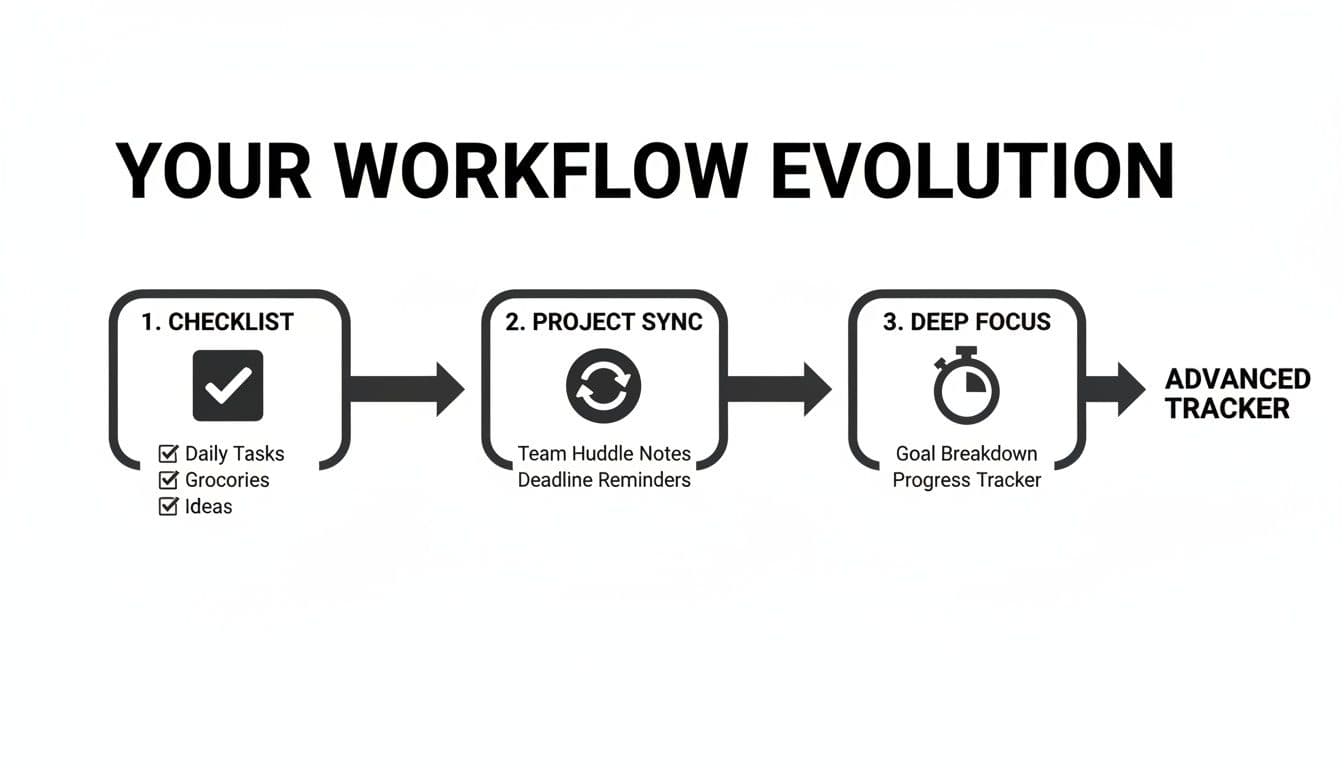
This journey starts with a basic list, then layers on project tool integration and dedicated focus sessions, ultimately creating a workflow that just plain works.
A Daily Workflow for Developers
For any developer, a good day starts long before you write a single line of code. The game is all about carving out long, uninterrupted stretches of time to wrestle with complex problems. A daily task tracker is the tool that makes this possible.
Here's a practical morning ritual to get you started:
- Sync and Triage: The first step is to pull your highest-priority tickets straight from your project tool (like Jira or Linear) into your daily plan. This creates a single source of truth for the day—no more tab-switching.
- Deconstruct the Problem: For each big ticket, use your tracker's editor to break it down into a technical checklist or smaller subtasks. This demystifies the path forward and gives you small wins to build momentum.
- Timebox Your Focus: Block out specific, sacred chunks of time on your calendar for deep work. Trust me, one two-hour block with zero interruptions is worth more than five hours of fragmented, stop-and-start coding.
- Launch a Focus Session: Fire up a timer with an app and website blocker to kill all distractions. With your plan locked in, you can finally sink into that state of complete concentration.
If you want to go deeper on structuring these work sprints, check out our guide on focus sessions for developers.
A Workflow for Founders and Leaders
Founders live in a constant tug-of-war between high-level strategic vision and the relentless demands of daily execution. A task tracker brings order to that chaos, making sure big-picture thinking doesn't get steamrolled by operational noise.
The workflow isn't just about getting more done; it's about making sure you get the right things done. By timeboxing strategic work, you treat it with the same importance as an urgent meeting.
This could look like blocking off a 90-minute session every morning for "product vision" or "investor outreach" before the reactive tasks take over. The tracker acts as a shield for this critical time, preventing the day from being eaten alive by small fires. This kind of structure is non-negotiable in a tough environment. With 76% of knowledge workers reporting burnout and nearly 70% of projects failing to meet their goals, having a system is more important than ever.
A Workflow for Freelancers
For freelancers, time is quite literally money. A daily task tracker becomes the command center for the entire business, helping you juggle multiple clients, log hours with precision, and get paid on time.
Here’s how freelancers can put their tracker to work:
- Assign Tasks to Clients: Keep everything organized by clearly separating the work for each client. This is your best defense against scope creep.
- Log Billable Hours Automatically: Use a built-in timer that tracks every minute you spend on a specific task. No more guesswork, no more lost revenue.
- Generate Time Reports: When it's time to invoice, you can export a detailed time log to send with it. This gives clients total transparency and builds trust.
Beyond just managing your tasks, it's also a huge help to learn how to organize digital files and master your workflow for that next level of efficiency.
Measuring What Matters for Better Productivity
It’s easy to confuse being busy with being effective. A long to-do list with everything crossed off feels great, but it doesn't really tell you if you spent your time on what truly matters. This is where a great daily task tracker changes the game. It helps you move beyond just counting tasks and gives you the real data you need to improve.
The whole point is to create a feedback loop for yourself. When you start measuring the right things, you begin to see the hidden patterns in your work habits. You can finally answer those nagging questions: "Where is my time really going?" and "Am I actually putting my best energy into my top priorities?"
This shift toward a more data-driven approach to personal productivity isn't just a niche trend. The daily planner app market, a big piece of this puzzle, was valued at $2 billion in 2025 and is on track to hit $6 billion by 2033, growing at a solid 15% each year. That growth signals a clear demand for smarter ways to manage our focus and time. You can read more about the trends in the daily planner app market on DataInsightsMarket.com.
Key Metrics to Start Tracking
To get any real value from tracking, you need to look at metrics that show the quality and focus of your work, not just the volume. A good daily task tracker makes this almost effortless by capturing data automatically as you go about your day.
Here are a few of the most impactful things you can start monitoring:
- Focus Session Duration: How long can you stay locked in on a single task without getting distracted? Watching this number grow is a fantastic indicator that you're strengthening your deep work muscle.
- Time Spent Per Project: By logging time against different projects or clients, you get a crystal-clear picture of where your effort is going. This is absolutely essential for understanding profitability and making smart priority calls.
- Planned vs. Actual Time: This might be the most eye-opening metric of all. It immediately highlights which kinds of tasks consistently blow past your estimates, helping you build much more realistic plans in the future.
Tracking these KPIs isn't about micromanaging yourself into a state of anxiety. It's about gaining the self-awareness you need to make small, steady improvements. The data is just a guide—a brutally honest one—that helps you work smarter, not just harder.
Turning Data Into Actionable Insights
Once you start collecting this information, you gain a whole new level of control over your workday. The insights from your daily task tracker can guide you toward making very specific, practical changes to how you work.
For instance, you might discover that:
- Your most productive hours are from 9 AM to 11 AM. That’s your golden window for tackling your most difficult creative work.
- A certain kind of task always takes longer than you think. This is a sign to either break it down into smaller pieces or just be more generous with your time estimates.
- You’re spending way less time on big-picture strategic goals than you thought, which might prompt you to rebalance your daily priorities.
This is the kind of continuous feedback that separates high-performers from those who just feel busy. For remote workers in particular, having accurate metrics is a lifesaver. You can learn more about how to sharpen your focus with effective time tracking for remote workers.
Got Questions About Daily Task Trackers?
It's smart to be skeptical about adding another tool to your stack. When it comes to something as personal as how you manage your day, you need to know it’s going to make a real difference, not just create more busywork. Let's tackle the most common questions people have.
Isn't This Just the Same as My Project Management Tool?
I hear this one all the time. You're already using something like Jira or Asana, so why add another layer? The key is understanding that they serve two very different—but complementary—jobs.
Think of your project management tool as the team's shared library. It’s the official source of truth for the what—every ticket, every epic, every task the team needs to tackle. A daily task tracker, on the other hand, is your personal command center for the how and when. It's where you pull a few specific tasks from that giant library and build a focused, achievable plan for your own day.
Your project tool holds the project's big picture. Your daily tracker is the engine you use to execute your specific piece of it, day in and day out.
The best part is when they connect. A good daily tracker integrates with your project tool, so you aren't manually copying and pasting tickets. It creates a smooth workflow, ensuring you're always aligned with team priorities while giving you the space to manage your own focus.
Will Planning My Day Really Save Me Time?
It feels a little backward, doesn't it? Taking time to plan when you could just be... working. But that upfront investment of 10 to 15 minutes pays for itself over and over throughout the day. The return on investment here is huge.
For one, it kills decision fatigue before it starts. You completely avoid that dreaded moment of staring at a massive backlog and thinking, "Okay... what now?" That hesitation, multiplied throughout the day, is a huge time sink.
With a clear roadmap, you stop the frantic context switching that absolutely demolishes your focus. Instead of bouncing between your inbox, Slack, and three different tickets, you move with intention from one task to the next, protecting your momentum and deep work time.
Can This Actually Help My Work-Life Balance?
Absolutely. This is one of the biggest, and most underrated, benefits. A primary cause of burnout is the feeling that work is an endless ocean of tasks. A daily task tracker gives you a way to define a shoreline.
By deciding what a "done" day looks like, you give yourself permission to fully log off when you’ve completed your plan. You can disconnect with confidence, knowing you accomplished what you set out to do.
It swaps that vague, nagging anxiety of a never-ending to-do list for the concrete satisfaction of a finished daily plan. That simple structure is one of the most powerful tools for protecting your personal time and stopping work from creeping into every part of your life.
Ready to build a more focused and intentional workday? Locu combines a minimalist to-do list, a focus timer, and seamless project management integrations into one powerful workspace. Start your free trial at locu.app and take back control of your time.
Make your daily task tracker enable deep work
Join developers who use a daily tracker to ship focused work.